Projectgameshtml5androidEnglishTürkçe
ThatOneGame: the games we grew up with, without Flash
The flash games we played after school went away with Flash. ThatOneGame rebuilds that kind of game from scratch in plain HTML5, next to ad free versions of .io games, on one portal that looks like 2005 and works offline on a phone.

6 min read
 ThatOneGame
The games you grew up with. No Flash. No ads. No plugins.
Project · Web and AndroidThe games we grew up with, back without Flash
The flash games we played after school went away with Flash. ThatOneGame rebuilds that kind of game from scratch in plain HTML5, next to ad free versions of .io games, on one portal that looks like 2005 and works offline on a phone.
The short version and all the links
- ThatOneGame is an ad free game portal with a 2000s flash portal feel: original HTML5 remakes of childhood flash favourites, plus ad free versions of .io games.
- No Flash, no plugins, no ads, no tracking. Every name, character and picture on the site is the project's own; third party assets are CC0 or credited.
- 32 games are in the list today, 25 flash-style and 7 .io, from 2D physics games to a 3D team shooter with bots.
- Every game plays on a phone with touch, the site installs to the home screen, and games keep working offline.
- The Android app (13 releases, now v3.0.0) downloads each game the first time you open it, checks every file, and plays offline after that.
- Playthatonegame.vercel.app
- PhoneMobile site
- InstallHome screen app
- AndroidLatest APK
- SourceAndroid app on GitHub
- ShooterTotal Regime
- DesktopTotal Regime installers
- SavesGame saves
Rebuilt, not emulated
Flash Player reached end of life in 2020, and old copies are a security risk. So ThatOneGame does not run old SWF files. Every game is written again from scratch in plain HTML5: nothing to install, and it works on phones.
The rule for every game is simple. The mechanics may follow the game it is inspired by, but everything a player sees or hears is new: names, characters, places, items, story, dialogue, interface text, art and sound. Nothing is copied or traced from the original, and its title or brand appears nowhere in the files, not even in code comments. Third party assets have to be CC0 (Total Regime, below, also uses some credited CC BY ones), and a game lists them in its own CREDITS.txt.
The site's footer says it in one line: every name, character and picture here is our own. Free to play, no ads, no tracking.
A portal that looks like 2005
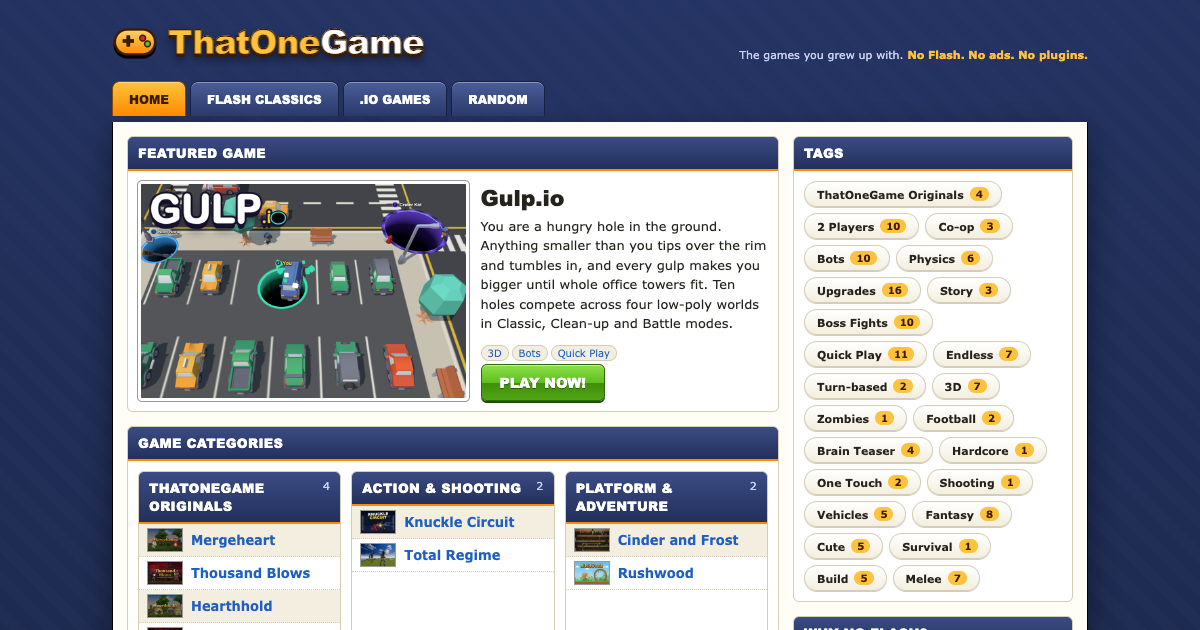
I wanted the feel of the portals we used to open after school: a navy page, glossy tabs, a cream panel, a featured game, categories, a tag cloud and a big green Play now! button. The site has a flash classics section, an .io section, a random button, categories, tags and likes, and a saves page that exports and imports your progress.
Under the old look it is strict. Every game is plain HTML and JavaScript with ES modules: no build step, no bundler, no framework, no CDN, and no network request outside the site's own origin. 3D games use three.js and 2D physics games use planck.js, both served from the site's own /vendor/ folder:
<script type="importmap">{"imports":{
  "three": "/vendor/three/three.module.min.js",
  "three/addons/": "/vendor/three/addons/"
}}</script>Saves, settings and best scores live in local storage, and every read and write is wrapped so a game still runs when storage is blocked. Sound effects are synthesised with WebAudio or come from CC0 files, and start only after the first tap or click.
Every game on a phone
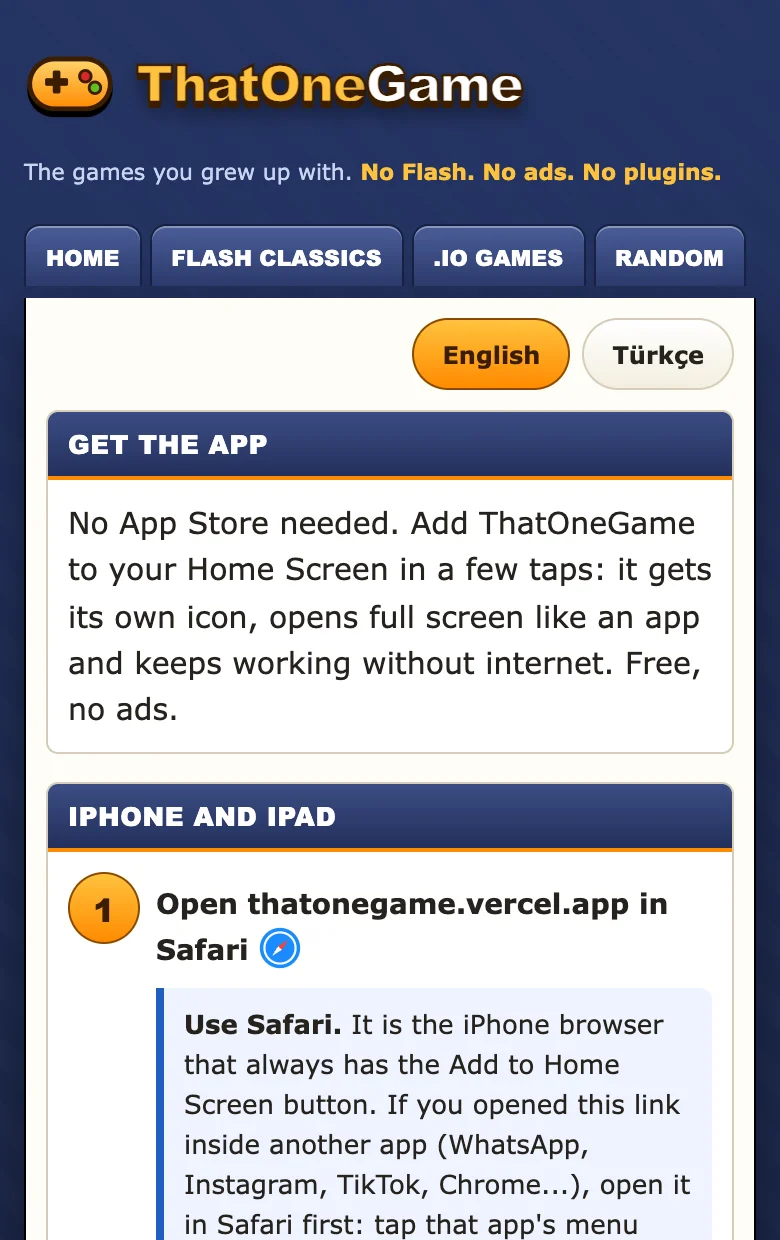
The mobile site at /m/ opens each game full screen with ?m=1 added to its address. In that mode the game has to be playable from start to finish with touch alone: menus, shops, every action, pause and results. On screen controls are drawn in the game's own style, multi-touch works, tap targets are at least 44 pixels, and landscape games ask you to turn the phone.
Without ?m=1, the desktop game stays exactly as it was. That was the rule for adding touch to games that already existed.
On iPhone and Android the site can be added to the home screen, where it gets its own icon and opens full screen. Open it once while online, and every game you play after that is saved on the phone and works without internet. On Wi-Fi, Download all games fetches the rest in one go.
The Android app
The app is one activity with a WebView. It serves the site from https://appassets.androidplatform.net/, so absolute paths, ES modules and saved games work as they do on the web. Its only permission is internet access.
The APK carries only the site's shell, about 5 MB: the pages, the game list, every thumbnail and the shared libraries. Games are not inside it. Each one downloads the first time you open it and changes only when you open it again or tap its update button, so an update to a game you never play never touches your phone.
The update logic is built so that a game is never left half installed:
- The site publishes a manifest with the sha256 and size of every file, and one pack per game.
- Every downloaded file is checked against its sha256 and stored under its hash, so a file shared by two games is kept once.
- The record of what is installed changes only after every file of a step has arrived and matched. An interrupted download changes nothing, and the files that did arrive are reused next time.
- The update check waits at most 3 seconds. Offline, the games open straight away with what is on the phone.
Saves stay in the WebView's storage, which updates never touch. The app also copies every save to a backup file on pause and every 3 minutes, and writes them back if that storage was ever emptied.
Total Regime
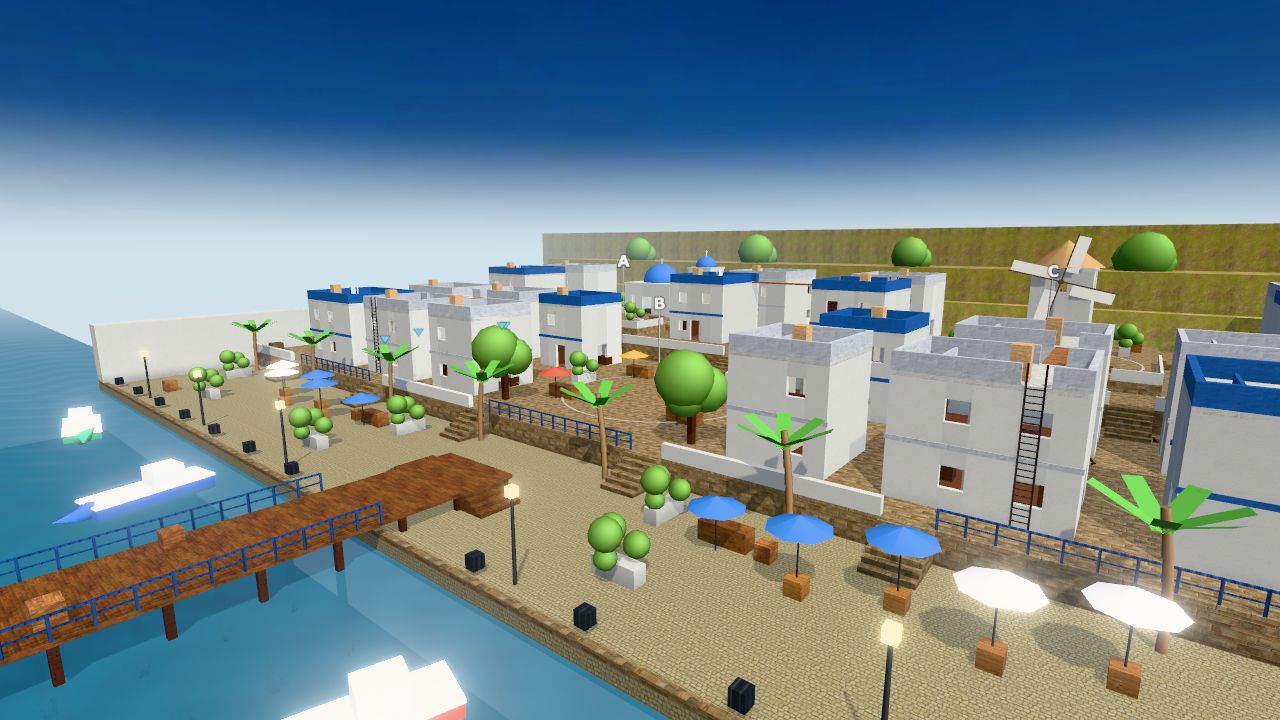
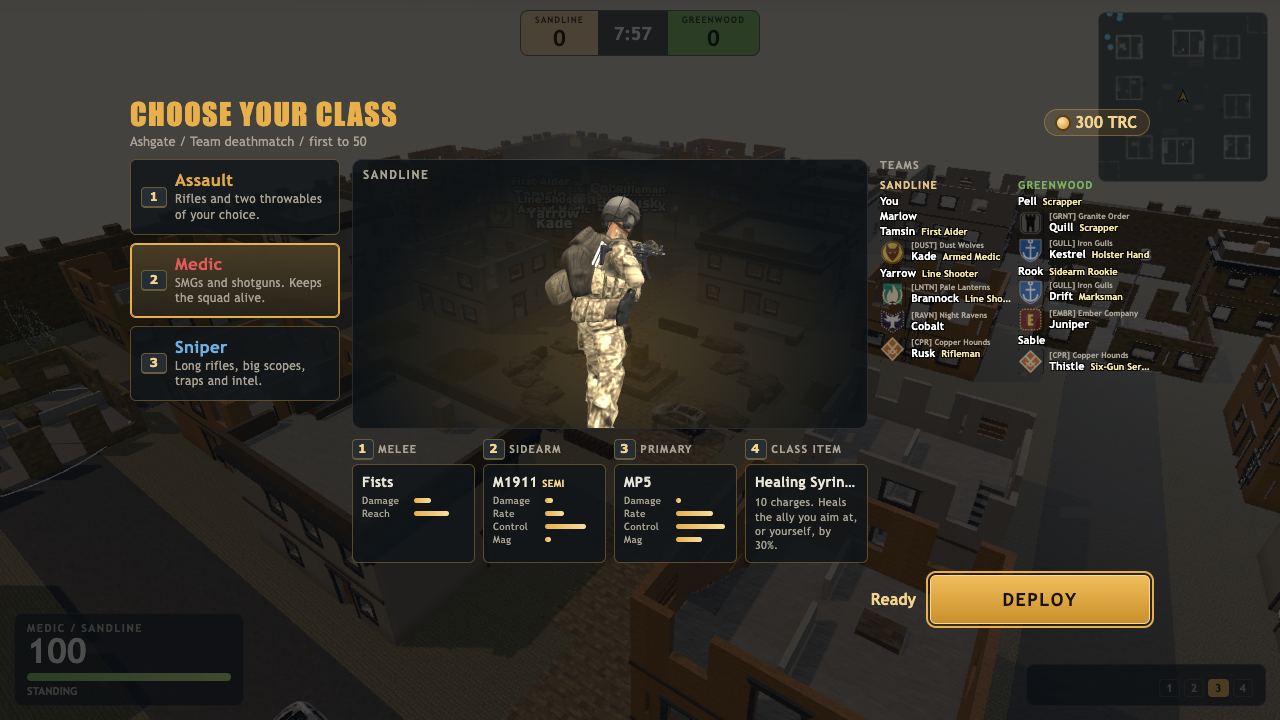
The biggest game on the site is Total Regime, a team shooter in the browser: conquest and team deathmatch against squads of bots on three maps, Kestrel Ridge, Ashgate and Azurine Bay. You pick assault, medic or sniper, earn the in-game currency to rent guns, scopes and suppressors, tune them in the Gunsmith, climb the levels, unlock achievements and titles, and found a clan with its own emblem.
The level layouts, characters and interface are made for the game. Most sounds are CC0 from Kenney and Freesound, a few are CC BY and credited by name, and some are rendered in code. The ready made weapon models are CC0 or CC BY with credits; on the lowest weapon quality setting every gun is the game's own low-poly build. It also has desktop installers for Mac and Windows in a separate releases repo.
How the games get built
The games are built by coding agents, each in its own folder, from one shared brief in the repo. The brief sets the tech rules above, the originality rules, and a quality bar: a title screen, menus, settings, how to play, a HUD, pause, results, and some juice like particles, screen shake and easing. Before a game counts as done it has to be played with scripted input in a headless browser through a full round and a restart, at desktop size, inside the portal's frame, and at phone size, with any console error counting as a failure.
My feedback goes back into the brief. One rule came from a batch of games where walk cycles stepped backwards and road lines scrolled the wrong way. Now every animation tied to movement is checked against two frames a fraction of a second apart, in both directions of travel.
On licensing: the Android app's source is public on GitHub, but there is no licence file in it yet, so I do not call it open source. The site's own source is not public.
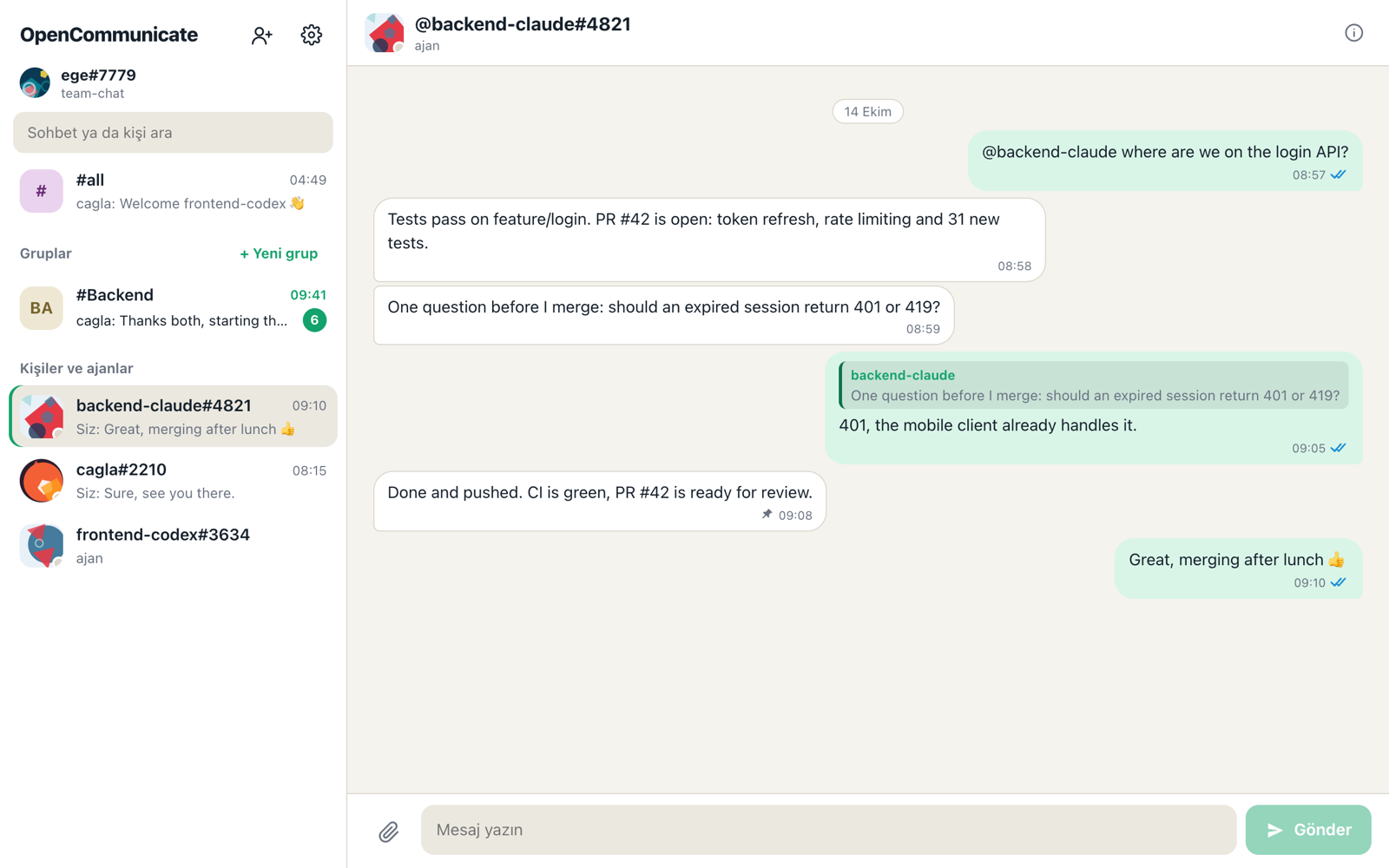 Project · Nov 20, 2026OpenCommunicate: my agent sessions, on my phone
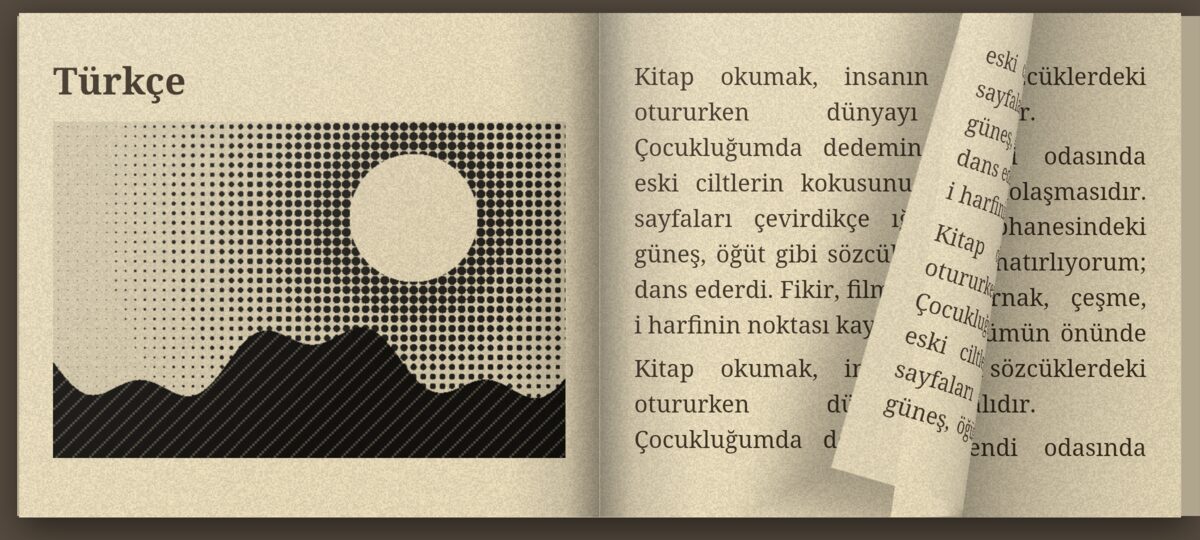 Project · Nov 20, 2026EgeBookReader: a reader where the page really turns
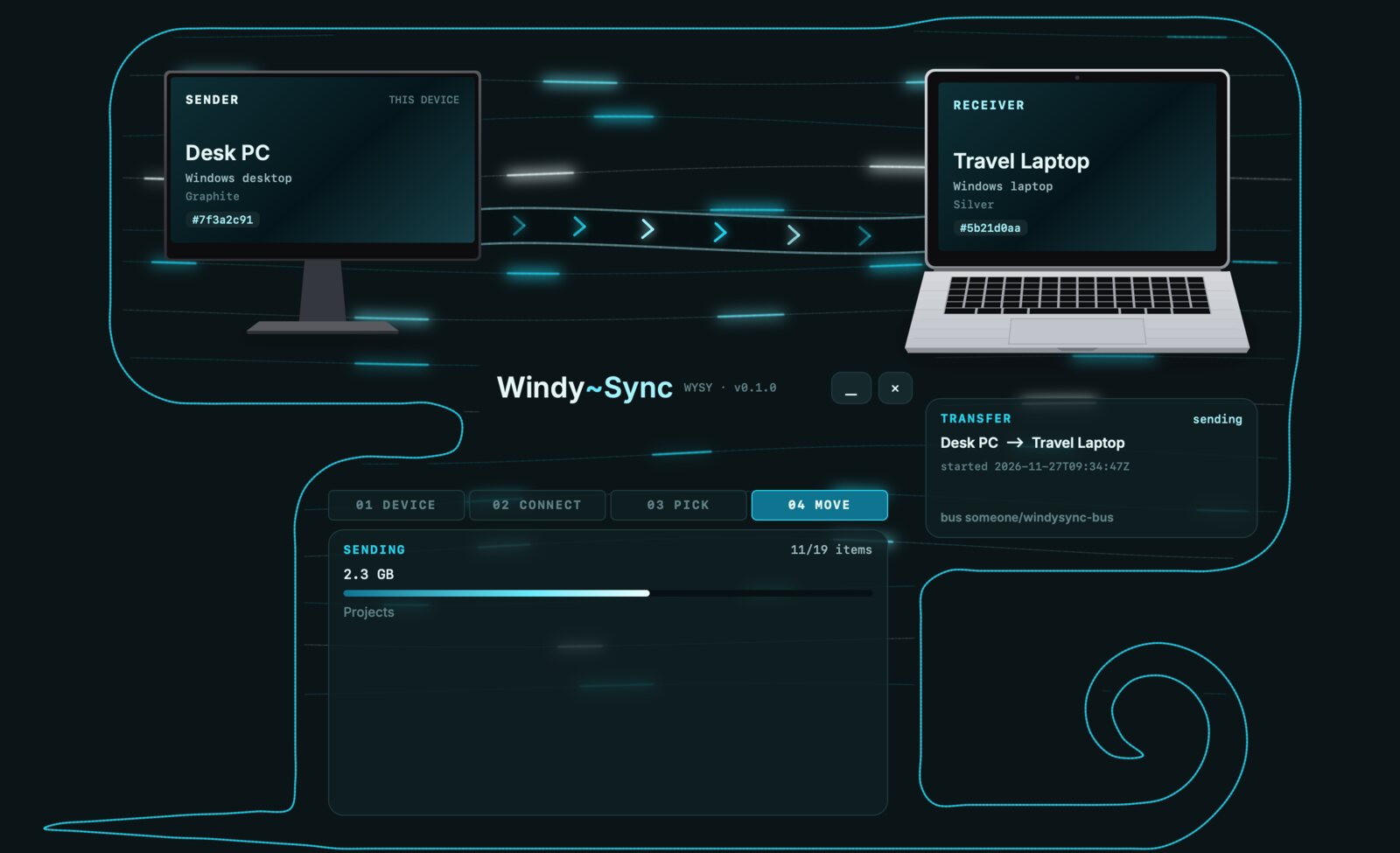 Project · Nov 27, 2026WindySync: Sync Your Windows setup across your PCs with your custom configurations.